Design of Experiments for Chemists and Engineers

Course overview

Course tutors

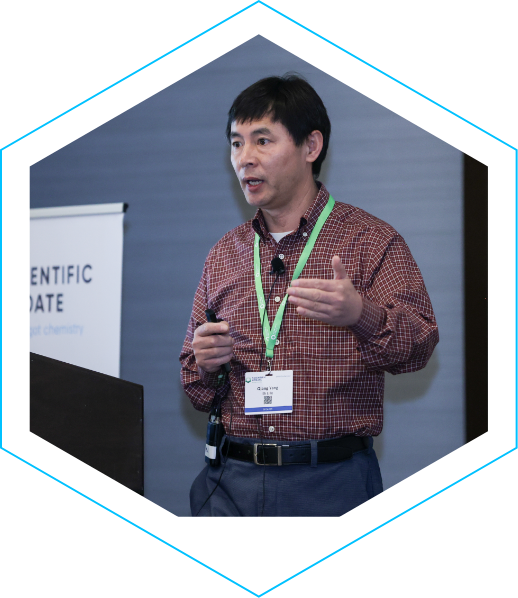
Dr Paul Murray
Dr Paul Murray
Paul Murray Catalysis Consulting Ltd

Course timings

Face to face training
2 Days
Face-to-face
Online training
4 Sessions (4 hours each)
Online

Details

Industrial Scientists can no longer afford to experiment in a trial-and-error manner, changing one factor at a time.  A far more effective method is to apply a systematic approach to experimentation that considers all factors simultaneously.

This approach is called Design of Experiments (DoE) and many scientists use it as an efficient way to solve serious problems afflicting their projects.

DoE provides information about the interaction of factors and the way the total system works, something not obtainable through traditional testing methods.  DoE also shows how interconnected factors respond over a wide range of values, without requiring the testing of all possible values directly.  DoE is a fundamental aspect of Quality by Design.

This now four session course written and presented by Dr Paul Murray a Process Chemist with extensive experience of applying DoE across a wide range of chemical reactions from reaction screening and new route development through to reaction optimisation.

The Course will empower Scientists to implement DoE in their work to more efficiently improve their processes.

Benefits

Benefits of Attending

arrow
  • Gain a comprehensive understanding of DoE
  • Learn how to use DoE to efficiently scope out reaction space and optimise new reactions
  • Link DoE with process development and quality by design
  • Development of novel, effective and robust solutions
  • Increased reaction understanding
  • Apply DoE in case-studies

Who Should Attend

arrow
  • Lab scientists
  • Process development scientists
  • Industrial researchers
  • Project managers

arrow
  • Understand the DoE process.
  • Select process factors and suitable ranges.
  • Understand the different types of experimental design and when to use them.
  • Identify main effects, interactions and interpret DoE models in relation to chemical understanding.
  • Understand where DoE will solve a problem and when to consider complementary techniques like reaction progress kinetics to probe more challenging processes.
  • Introduction to the principals of Design of Experiments with a comparison with traditional methods.
  • Introduction to DoE language and the DoE process. How to identify potentially important factors and ranges.
  • Designs for 2 factors.
  • Taylor’s expansion and an introduction to the maths.
  • Designs for 3 and more factors.
  • Work Shop: Selecting factors and Ranges
  • Fractional Factorial designs. Different design types from screening designs to optimisation and robustness designs.
  • How and when to use the different design types. Workshop: Calculating main effects and identifying interactions
  • Principal component analysis (PCA) for solvent selection.
  • Workshop: implementing DoE.
  • Case studies.
  • Review of the course and questions

Become a speaker at one of our events

Share your expertise with a global audience of industry professionals. Scientific Update is continually seeking thought leaders and industry innovators to speak at our renowned conferences and training courses.